
4G Solar Cameras
Remote locations without grid power or wired internet connectivity present a surveillance challenge that conventional hardwired systems cannot address. LS VISION 4G Solar Cameras combine solar charging with SIM card connectivity to deliver autonomous monitoring in farms, forests, construction sites, and properties far from electrical infrastructure. Order online from the official store today and gain surveillance independence where others see only obstacles.
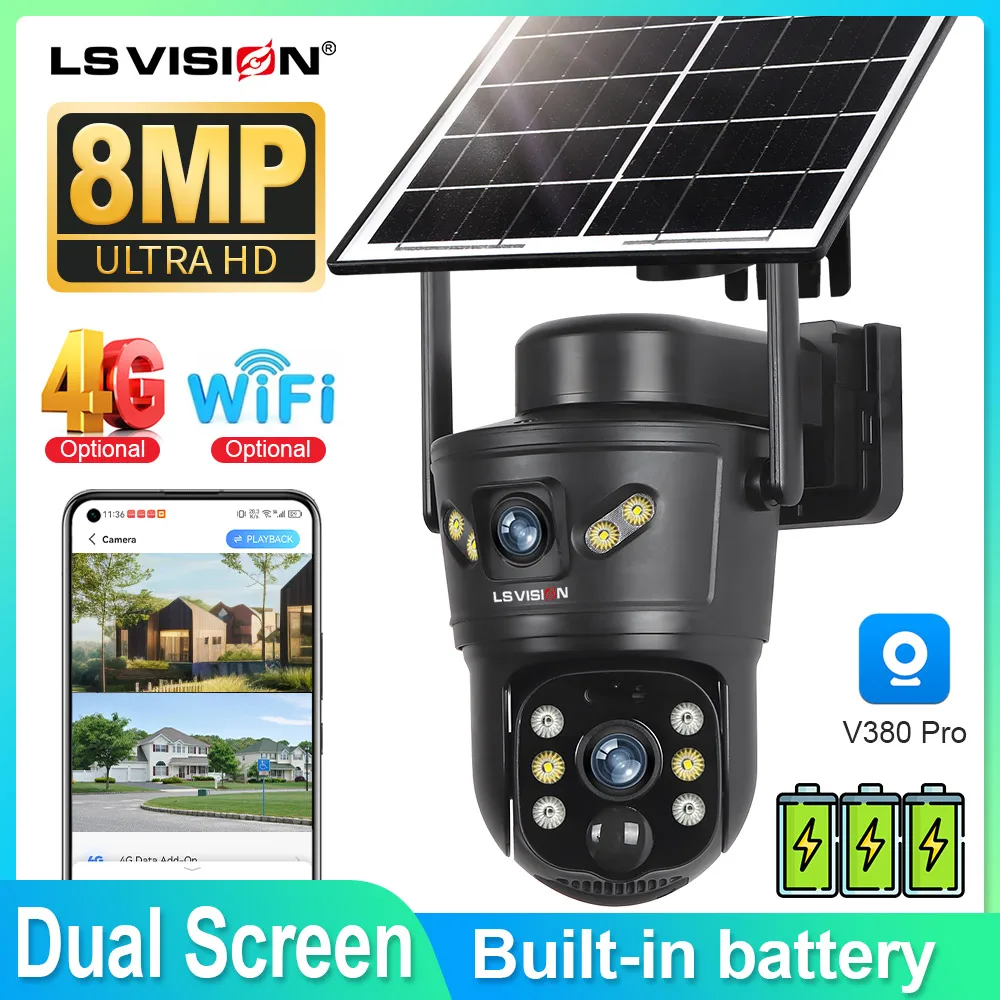
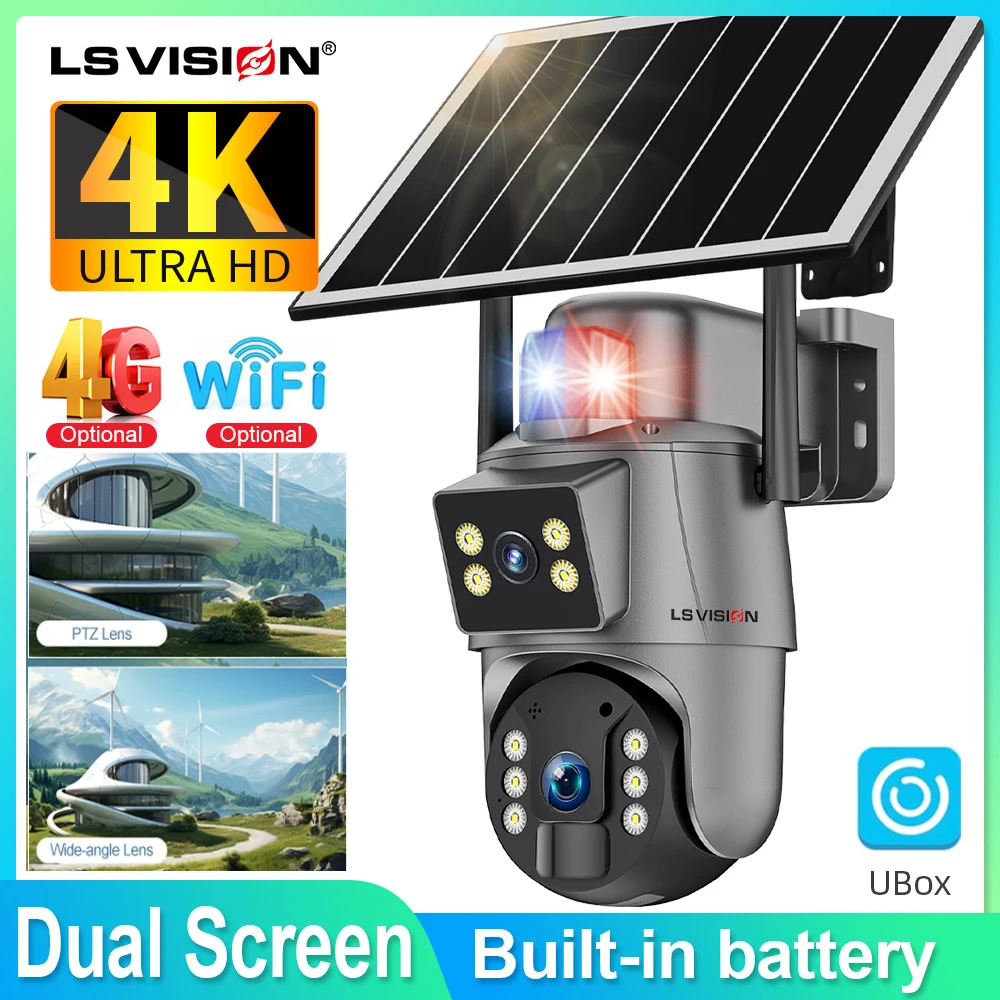
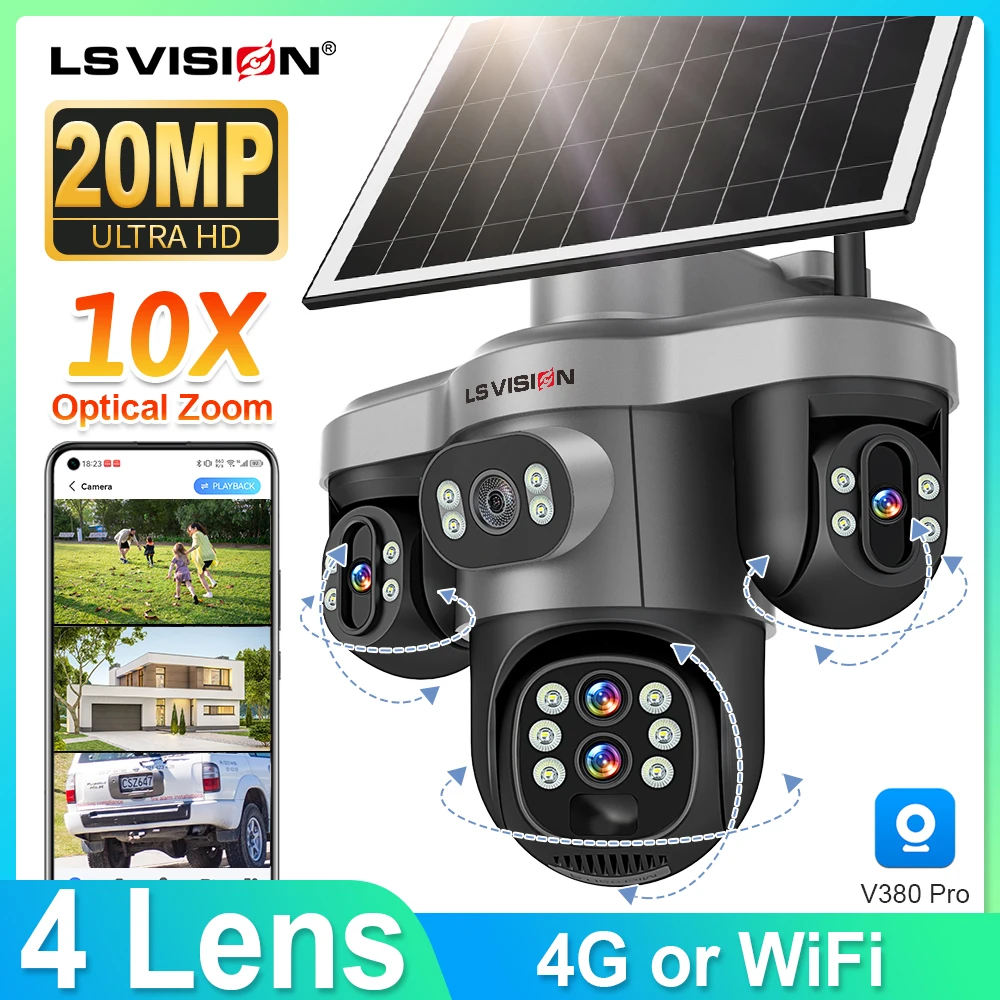
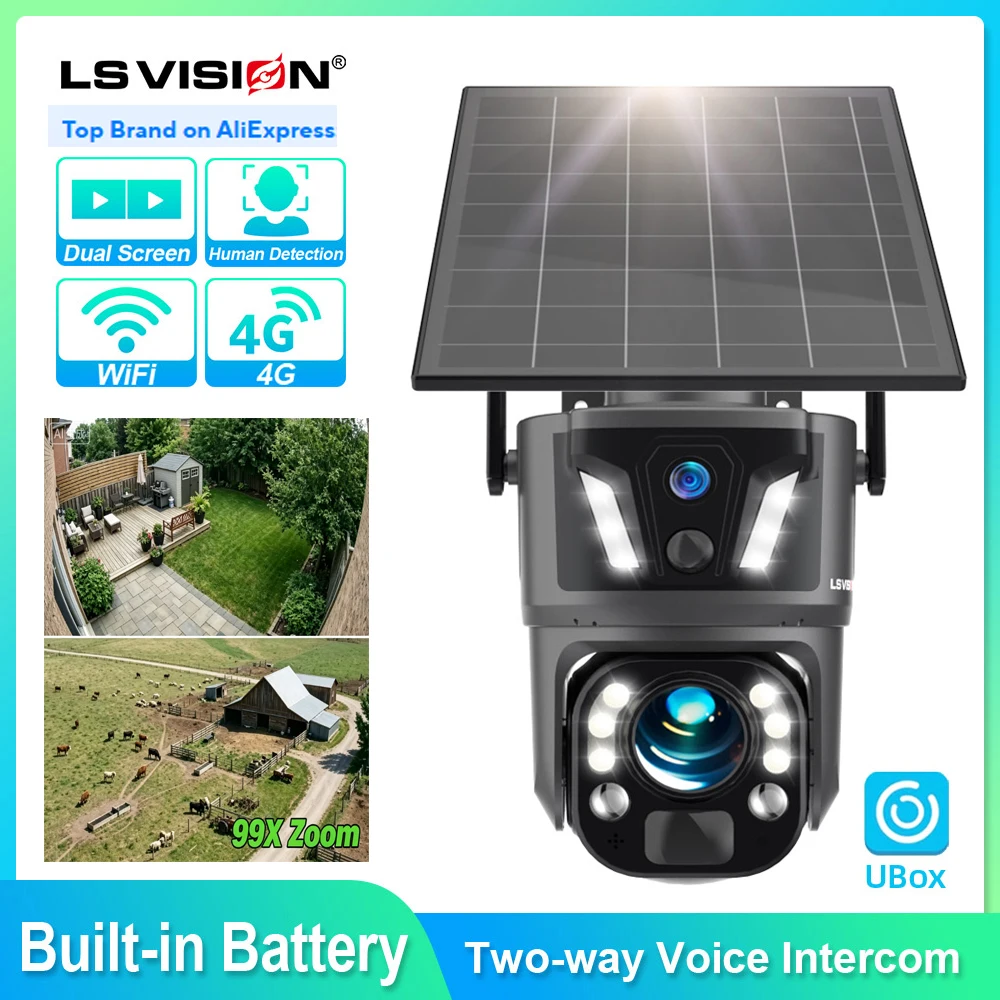
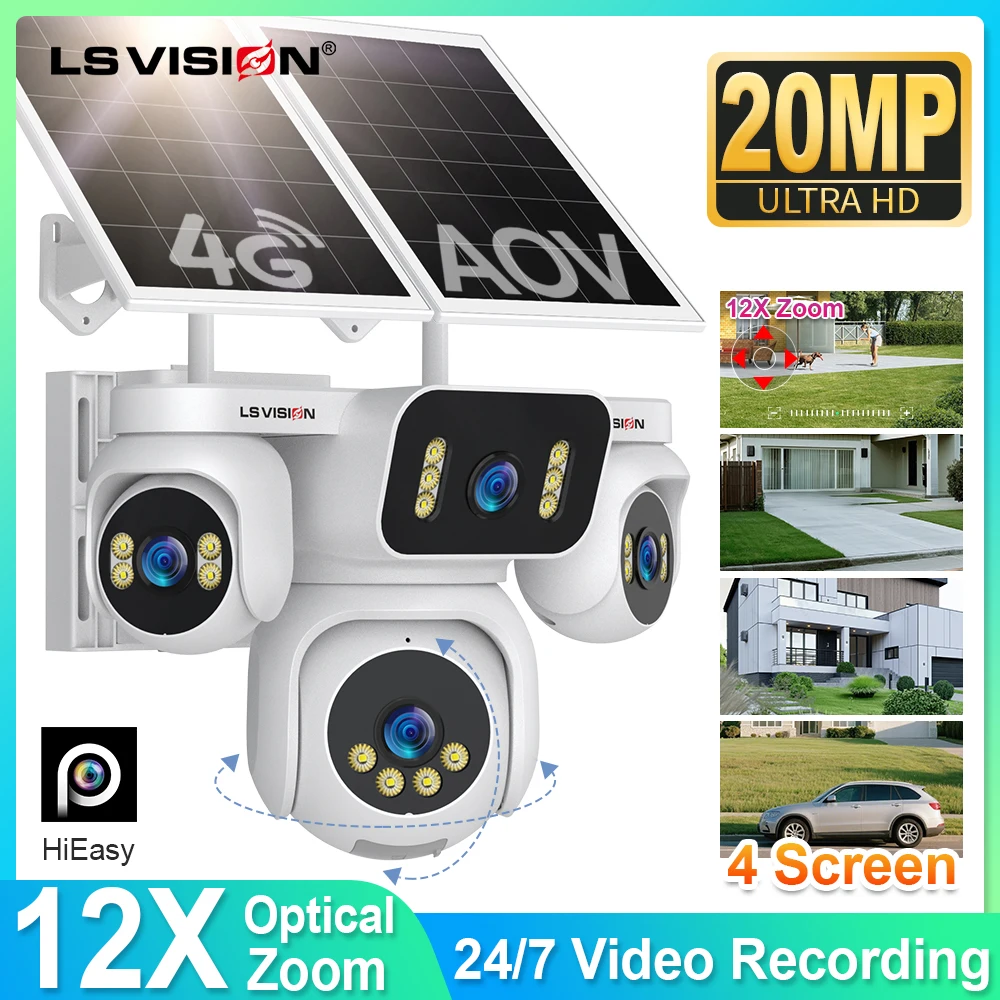
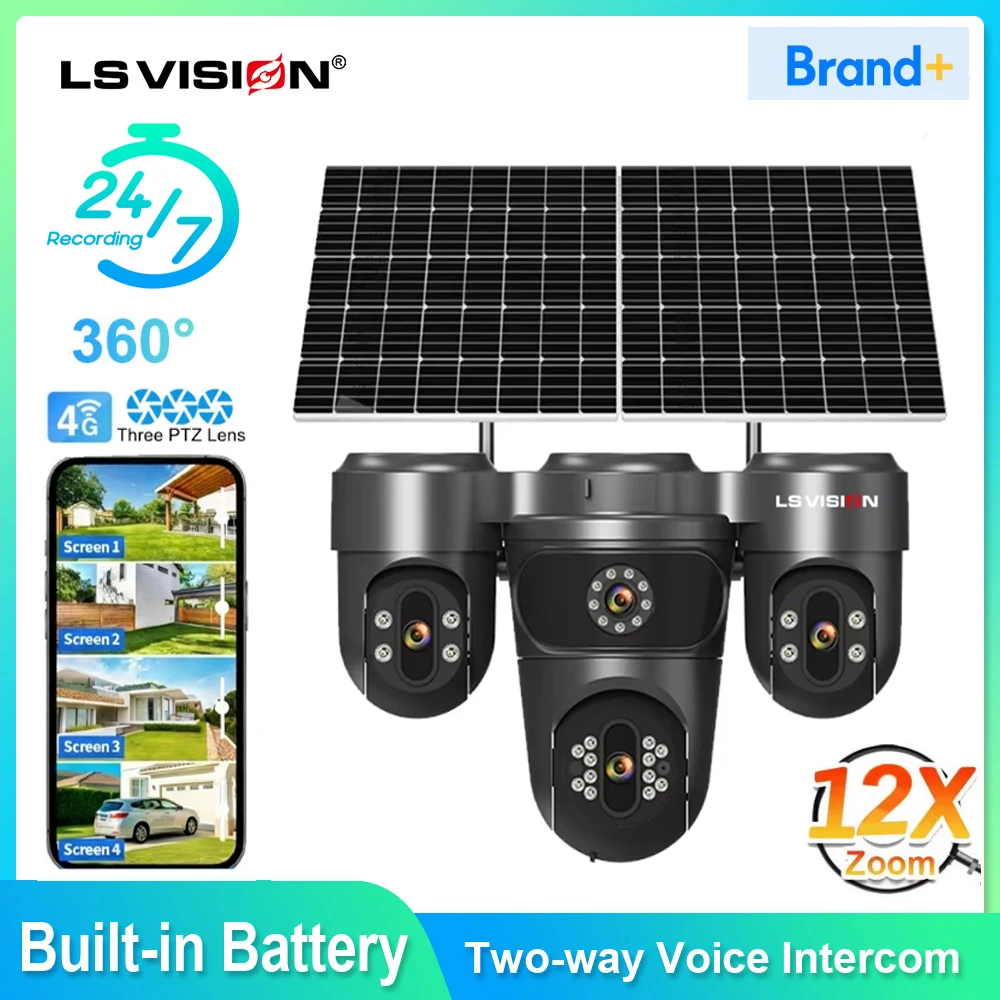
LS VISION 4G Solar Cameras for Off-Grid Monitoring
LS VISION 4G Solar Cameras integrate monocrystalline solar panels, rechargeable batteries, and 4G LTE cellular connectivity to function independently in locations where utility power and broadband internet do not exist. Solar panels rated 5–15 watts charge the internal battery bank during daylight hours, storing sufficient energy to power the camera and transmit video through the night. 4G LTE connectivity uses commercial SIM cards from major carriers, letting you access video streams and motion alerts on your mobile device using standard cellular networks. This combination eliminates the need for trenching power cables, running network wiring, or negotiating with utility companies—setup requires only pole mounting and SIM activation. Weatherproof housing rated IP67 protects the circuit board, sensor, and battery compartment from rain, dust, salt spray, and temperature swings across harsh outdoor environments. Battery capacity ranges from 5,000 mAh in compact models to 20,000 mAh in larger units, with discharge curves engineered to maintain sufficient energy reserves even during extended cloudy periods. Video resolution spans 1080p to 4K depending on the model selected, with framerate adjustments available to balance image quality against cellular data consumption.
Solar Charging and 4G LTE Technology
Monocrystalline solar cells convert ambient light to electrical current more efficiently than polycrystalline alternatives, generating usable power even on cloudy days when diffuse light reduces peak output. The camera’s charge controller monitors battery voltage and adjusts charging current to prevent overcharging, extending battery lifespan to 3–5 years of daily cycling. 4G LTE provides download speeds of 10–50 Mbps depending on your carrier and location, supporting continuous video streaming or rapid motion alert uploads. Unlike WiFi, which requires infrastructure within 100 meters, 4G coverage extends across thousands of square kilometers from a single tower, reaching properties that seem impossibly remote by conventional standards. Dual SIM support in some models lets you activate backup connectivity through a different carrier, ensuring surveillance continuity if one provider experiences an outage. Video compression using H.264 or H.265 codecs keeps data transfer manageable—a 12-hour night of 1080p recording at 15 frames per second consumes roughly 2–3 gigabytes, fitting within typical monthly data allowances of 5–10 GB. Cloud storage integration lets you archive important motion events indefinitely while deleting routine overnight footage after seven days, conserving bandwidth on data-limited plans.
Why LS VISION 4G Solar Cameras Outperform Off-Grid Alternatives
Competing solar cameras often undersize solar panels to reduce costs, leaving owners stranded during winter or rainy season when days are shorter and cloudier. LS VISION 4G Solar Cameras carry oversized panel arrays that maintain charge even in marginal light conditions, with field reports showing battery reserves above 50 percent on winter days at latitudes above 50 degrees. Battery quality matters critically in off-grid systems because replacements require physical access to the camera; this brand uses automotive-grade cells rated for 1,000 charge cycles, compared to 300–500 cycles in budget competitors. 4G LTE outperforms satellite connectivity in response time and reliability—motion alerts arrive within 2–5 seconds versus 30–60 second delays common with satellite systems. Setup complexity decreases dramatically with 4G because you simply insert a SIM card and power on the device; satellite systems require technician dispatch to align antennas and configure communication parameters. Real-world field data shows LS VISION 4G Solar Cameras operating reliably in farms, ranches, and remote properties across five continents, with documented uptime exceeding 99 percent when solar panels remain unobstructed.
Installation, Maintenance, and Deployment Scenarios
Mount cameras on poles, fence posts, or walls facing south to maximize solar panel exposure in the Northern Hemisphere; orient north-facing in the Southern Hemisphere. Position the camera 8–15 feet high to capture facial detail while maintaining wide area coverage, avoiding placement directly under tree canopies where shade dramatically reduces charging output. Before final installation, test 4G signal strength at your site using a carrier’s signal meter or a smartphone with the same provider; minimum bars should show at least two of four. Activate your SIM card with a suitable data plan before mounting the camera; confirm the plan includes sufficient monthly allowance for your expected usage pattern—calculate based on video resolution and how many motion events you expect daily. Schedule quarterly panel cleaning to remove dust, bird droppings, and salt spray that accumulate on glass surfaces, reducing charging efficiency by 20–30 percent if left unattended. Review power consumption settings in the camera’s management app, enabling features like reduced nighttime framerate or longer gaps between motion updates if you need to stretch monthly data limits. For properties with harsh seasonal weather, install the camera on a tilt-adjustable mount so you can increase solar panel angle in winter when the sun sits lower on the horizon.